 by Mark
 by Mark E. Lasbury for Indiana On Tap
Update: Congress is delaying most of the November 12 crackdown on hemp-derived THC products until December 11, giving the industry one extra month before the new total-THC and 0.4 mg-per-container limits take effect. Producers and vendors hope that window is enough to push Congress and the White House toward a regulated market—age limits, labeling, and workable potency rules—instead of an outright ban that would pull most current gummies, drinks, and similar products off shelves.
Indiana craft beverage producers are in the middle of a trying period right now. Consumer attitudes and preferences are changing, economic factors are currently less than optimal, and government regulations are both changing and burdensome. With respect to the regulatory environment, upcoming changes are going to impact THC seltzers, mocktails, infused lemonades, and sodas.
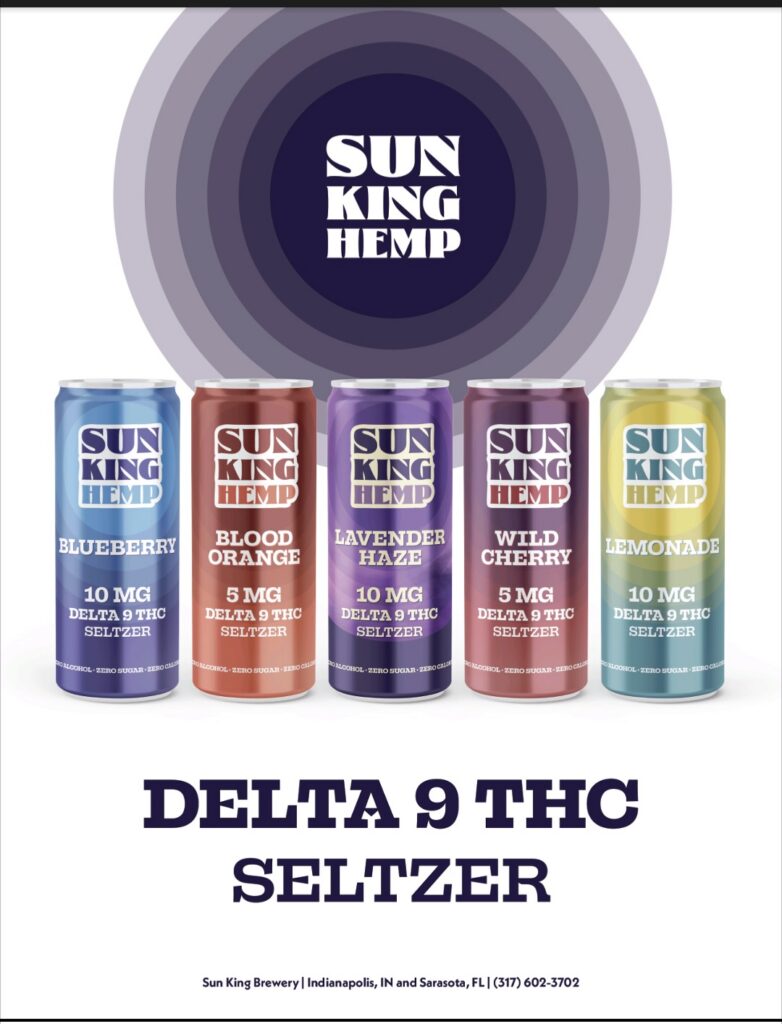
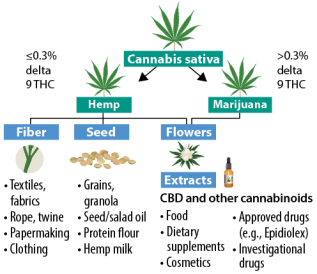
The federal budget bill signed in late 2025 has some provisions that go into effect in November and December of 2026. The regulations written into the budget agreement bring changes that will have wide ranging and detrimental effects on craft producers and retailers, and even some farmers. Ever since the 2018 Agricultural Bill was passed, the legal limit on THC-derived compounds in products has been 0.3% by weight. This has allowed for seltzers and such of 10 mg or more, mostly because liquid products are relatively heavy.
However, the new federal guidelines that go into effect in November will replace the 0.3% by weight limit with a hard cap of 0.4 mg/container, no matter the size. This is substantially less THC-derived product than the current possible levels of 5 mg-100mg/container and the new limit will afford users no psychoactive effect. It would be equal to limiting a typical craft beer to about 0.03% ABV. Heck a near beer or kombucha is 0.5%, and 3/2 beer is 4.0%! At the new regulated level, one would need to drink 12.5 seltzers to reach the same level of THC exposure.
Another effect of the new regulations includes a complete ban on synthetic and semi-synthetic THC compounds in November of this year, which means that only Delta-9 and THCA (where the A is for acid; it is the raw, acidic precursor to THC) will be allowed. Regulation of marijuana-derived THC in products is scheduled for a vote by Congress in December, so in states where recreational marijuana is legal, producers could technically switch from Delta-7, -8, and -10, which would be illegal, to straightTHC….odd (although you’d be walking into a felony for this in Indiana).
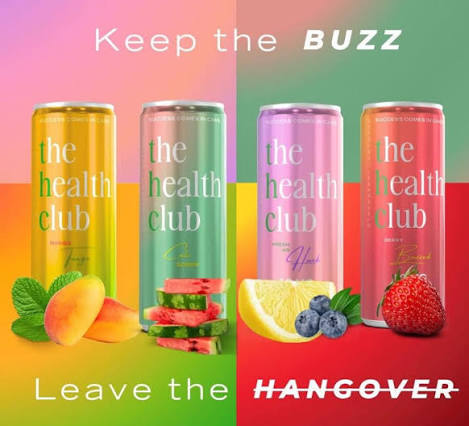
Many companies in Indiana will be affected by these changes, including Sun King Brewing, Generation NA in Lafayette, and Floral Beverage in Gas City. A producer/retailer that will be hugely affected is The Health Club THC Taproom and Cafe in Broad Ripple, and I spoke to Laura DeLuca from The Health Club about this issue. They produce and serve signature infused seltzers (delta-9 THC and CBD/CBG varieties) on tap (first THC taproom in the state), along with infused and non-infused cafe drinks, and cannabis cocktails/mocktails made with their flavorless cannabis spirit, HighTen, plus infused simple syrups.
If/when the ban takes effect, Laura told me, “We’d lose almost everything we make, our Delta 9 THC products across the board would no longer be legal to produce, distribute, or serve (we don’t use any synthetic cannabinoids). The only products that would still be allowed are broad-spectrum, non-psychoactive cannabinoids like CBD, CBG, and CBN (Full spectrum CBD would be illegal).” She added, “We’ll still sell our CBD/CBG products, but most of our customer base is looking for THC specifically. Adults have found real benefits in THC over alcohol, and it’s a hard switch back to something non-intoxicating once you’ve experienced that.”
It will be of zero commercial worth to switch to 100% delta-9 THC and have to hold to the 0.4 mg cap, the production costs will be essentially the same, so the lower limit offers no advantage in cost, and the consumers of these products are extremely dose conscious, so the 0.4 mg drinks will have no appeal. This also applies to gummies and vapes, and while it might be legal to sell individual gummies or a single hit vape at 0.4 mg that would have an effect (instead of limiting the entire container to 0.4mg), the cost of the labeling, wrapper, and warning label would be more than the cost and profit of selling the product.
There was also an Indiana state bill (SB 250) to codify the federal regulations into state law, as well as go a bit further, and in the spring of 2026 it passed easily out of the Indiana Senate and a House committee. However, it missed a second reading in the full House and dies for that session. It will likely be revived in 2027. This would criminalize the 0.4 mg/container hard cap, establish oversight by ATC with a $550 retailer permit, and make the products 21+ for purchase. Despite the state bill not being enacted, the state prosecutor’s office is making preparations to enforce the federal regulations in November.
So, are there alternatives for these producers? Yes, but they are limited at best. They could possibly switch from hemp-based THC compounds to psychoactive agents like kava, kanna, or muscimol. Kava comes from the Piper methysticum plant (related to peppercorns), kanna is from the Sceletium tortuosum plant from South Africa, and muscimol is a mushroom-derived product from Amanita muscaria (Fly Agaric). Both kava and musicmol work through GABA receptors in the brain, although in different ways, while kanna acts through serotonin reuptake and monoamine transport. All three produce effects similar, but slightly different from, THC.
Kanna is the most likely target for some producers, because it sits in a grey area when it comes to FDA authorization for use as a food additive. Muscimol is explicitly deauthorized, and kava is classified as a food, but use in products is limited to steeping it as a tea in water. Some jurisdictions are limiting that use as well (New York City, for example). Laura told me, “We’re hesitant to pivot into another category like kanna or kava, and we’d rather keep fighting for this industry and for Americans’ right to a product that’s a genuinely safer alternative to alcohol. That said, nothing’s off the table. We’re always exploring combinations of non-psychoactive cannabinoids and other functional ingredients, L-theanine and magnesium are two of our favorites to pair with HighTen in mocktails.”
There is the possibility (small) that a negotiated change to regulations could occur between now and the date of implementation. Of this, Laura said, “We see a regulatory fix as most likely happening at the last minute, probably late September or early October, when the legislators are back in session. We are in support of common-sense regulation, and a lot of the framework alcohol falls under would make sense for hemp too. But they’re two very different products, so a complete blanket regulation across both markets is likely to create a few hiccups. Since a lot of retailers already work with the ATC, that’s probably still the most likely path to regulation.”
Things are likely to change drastically for this market if there isn’t a negotiated change in the fall legislative session. Laura suggested, “If you want to help support the hemp industry: register to vote, and actually vote. Contact your representatives. We’ve got resources at trythehealthclub.com/savehemp, including a pre-written, one-click letter that sends straight to your reps. And make sure to support your favorite local hemp brands.”
