 by Mark
 by Mark E. Lasbury for Indiana On Tap
Craft beer is inherently collaborative – different brewers work together, as do breweries, and they all work with their customers and the community; no brewery is an island. Brewing is as much an art as it is a science, and art is a collaborative endeavor.
Collaboration in craft beer manifests itself in many ways, and many of them have little to do with beer, but in this article I want to focus on collaboration beers, often just called collabs. UnTappd has more than 4500 beers officially characterized as collaboration beers, and I’m sure that number is low, some collabs aren’t labeled as such.
Why so many collabs? Because they’re a great idea for a brewery’s business, both directly and indirectly. Directly, collab beers sell well, and what brewery is going to snub their nose at more revenue? Indirectly, the benefits of collabs may or may not be more subtle, but they too will work to increase sales, even if it’s not through this one particular collab beer.
Shoreline Brewery in Michigan City did 20 collab beers for their 20th anniversary in 2025. Some were collaborations with their fellow breweries, some were with groups, some were with individuals. They crossed styles and did some very innovative things for these beers, while at the same time increasing their community engagement. I particularly liked that they did collab flights through the year.
The Guardian Brewing in Muncie did a collab beer with a different band each year. Three Floyds Brewing does this as well – heck, they’ll collaborate with anyone! A conservative estimate based on UnTapped has 60+ collabs for Three Floyds. Almost all breweries do collabs, and even though I’m just one guy, I’ll tell you straight out that I do seek them out.
If collaborations didn’t help these breweries, they wouldn’t do them, after all, it costs them money (travel, ingredients, new label design, time, marketing, etc). The payoffs must come, and they must be readily apparent. Making more money by increasing sales is easy to track, but many of the benefits are less apparent.
The positives from collabs include things you may not have considered. There is the growth of brewers’ knowledge; learning from one another is a the way most brewing knowledge is passed on. Not all brewers know the same things, techniques, hacks, procedures, experience with different ingredients and equipment. What did Emerson say?, “Every man is my superior in that I can learn from him.”
Second, innovation is driven principally by collaboration. Working within a single philosophy or silo of beer thought leads to stagnation. There are beers that exist solely because two brewers had a wild idea together, and voila, something new appears. Not all are great ideas, but if you don’t have ten bad ideas a day, then you’re not having enough ideas. Experimenting with ingredients, flavors, techniques is best done when there is more than one set of eyes on the prize.
Third, collaborations can move the community forward. I can’t tell you how many times I have learned about a charity, community group, or business by seeing the collaboration beer they have done with a brewery. A beer can build relationships between a brewery and the community, and downstream of that, between the drinkers and the community. The idea also works within the brewing community, but we’ve kind of hit on that above, it works just as well, or better, for the community outside of brewing. Cause-driven beers and collabs help charities raise awareness and funds, and that helps everyone.
It’s easy for brewers to burn out; it happens all the time. Owners and concerned people everywhere must help to make sure brewers are fulfilled and know they are appreciated. One way to do this is to make sure they are having some fun on the job. Collaborations are a way to do this. I often say that brewers have the least amount of time to go out and try beers, talk to brewers, and just have a fun day. Collabs are a way to be social, geek out on beer, and remind brewers why they do this.
Collabs also help in ways that can be enumerated, and have metrics that can be measured. These would include things like increased sales, increased social media engagement, and other types of buzz. Collaborations with other breweries other entities allow you to “expand your brand via their social media channels, emails, and direct marketing in the taproom. You tap into their fan base, which could be very different from your own (even between breweries), and enter a new market. This can, and does, result in increased sales now, and into the future.
The exclusivity of a collab beer, its temporal nature, and its cache can lead directly to increased sales. Collabs are usually done on smaller systems, so you know that they will be short lived. For regulars, they are something new and exotic, driving taproom sales and buzz. Finally, sharing the cost of ingredients, infrastructure, time/labor, and can help defer costs of a beer, while still enjoying the increases in sales. This is especially true for smaller breweries that enter into collabs.
(BTW – I know that I’ve buried the lede here, making money with collabs is indeed the crux of the matter here.)
So – do collaboration beers really help with sales, and what is the evidence for that? Well, A 2019 empirical study of Seattle’s craft brewing scene (based on 22 in-depth interviews – Zahr K. Said, “Craft Beer and the Rising Tide Effect: An Empirical Study of Sharing and Collaboration Among Seattle’s Craft Breweries,” Lewis & Clark Law Review, Vol. 23, Issue 1 (2019), pp. 385–386) found that collaboration beers reliably sell in taprooms, even experimental or “bizarre” ones. Brewers noted they satisfy consumers’ demand for novelty and variety, helping move inventory and maintain engagement without heavy additional marketing.
Grand Junction Brewing and Tarnished Hollow Brewing have done two collaborations, Corrupted by Nature, and Mysterious Nature, riffs on GJBC’s flagship IPA called One With Nature, and they have sold amazingly well. Both brewers have said that they have been well received, sales wise, with the Corrupted by Nature now in it’s second iteration (would they make it again if it didn’t sell well?).
Likewise, Ted Burrell of Northern Tropics Brewing told me that his collaboration beer, Island Rat Belgian Blonde with Gas City Brewing has been a great addition. He said, “The island rat was the first collab either of us have ever done but it was a blast to brew together and I feel like it has created sales and a buzz with both our customers. We will do it again!”
Don’t just take their word for it, I’ve got more evidence. One marketing analysis (source – NielsenIQ report: “From Value to Vibe: How Moderation, Preference and New Drinkers Are Reshaping US Beverage Alcohol”, published January 14, 2026) noted that companies growing “innovation sales” are 2.14x more likely to grow overall revenue. Collabs fit this by introducing novel, story-driven products.
In addition to that, in its 2024 and 2025 “Year in Beer” reports and annual updates, Brewers Association noted that breweries were responding to slower growth by “creating groups and partnerships” and using collaborations to drive taproom traffic (ie. sales), storytelling, and visibility.
Finally, brewing giant Carling noted, “These exclusive often one-off products can drive demand, encouraging consumers to seek out and try the special offerings created through collaborations. Excitement and buzz can be created amongst consumers attracting attention from beer enthusiasts and increasing visibility for both breweries involved.” (Carling Partnership, “Why Do Brewers Collaborate?” industry insights article, accessed 2026).
It’s readily apparent from these data that doing collabs is a good idea for sales and taproom traffic, but even if they increase in sales is modest, the other benefits of collabs make them a great idea for every brewery. As stated by Southern Grist Brewing, collabs provide, “an increase in engagement, an increase in trust with consumers, and an increase in relationship [with the partner]. If we don’t make a buck but get all those, that’s awesome.” (Ollie – getollie.com, June 28, 2023: Breweries’ New Approach to Beer Collabs)
This idea is reinforced by Nic Girouard, head brewer at Shoreline Brewery. He told me, “Collaborations provide a moment of camaraderie among brewers, who often do not see one another or may not even know each other before the brew day. They definitely provide each brewer the opportunity to learn something from the other, which is usually very welcomed as most brewers I know love learning anything to become better, or more efficient in their practices. Collaborations often provide a creative outlet for each of us as well, we are generally allowed a little more flexibility in developing a collaborative brew, whether in budget or by using ingredients we might not have used before.”
I encourage brewers to expand their collaboration brews in this period of tighter margins and reduced growth. I also encourage groups with messages they wish to get out to collaborate with their local craft brewery on a beer that will raise awareness and perhaps some funds. Finally, I encourage craft beer fans to seek out collaboration beers for their novelty and to acknowledge the efforts of the industry. Let the breweries know that you like these projects and will continue to support them.
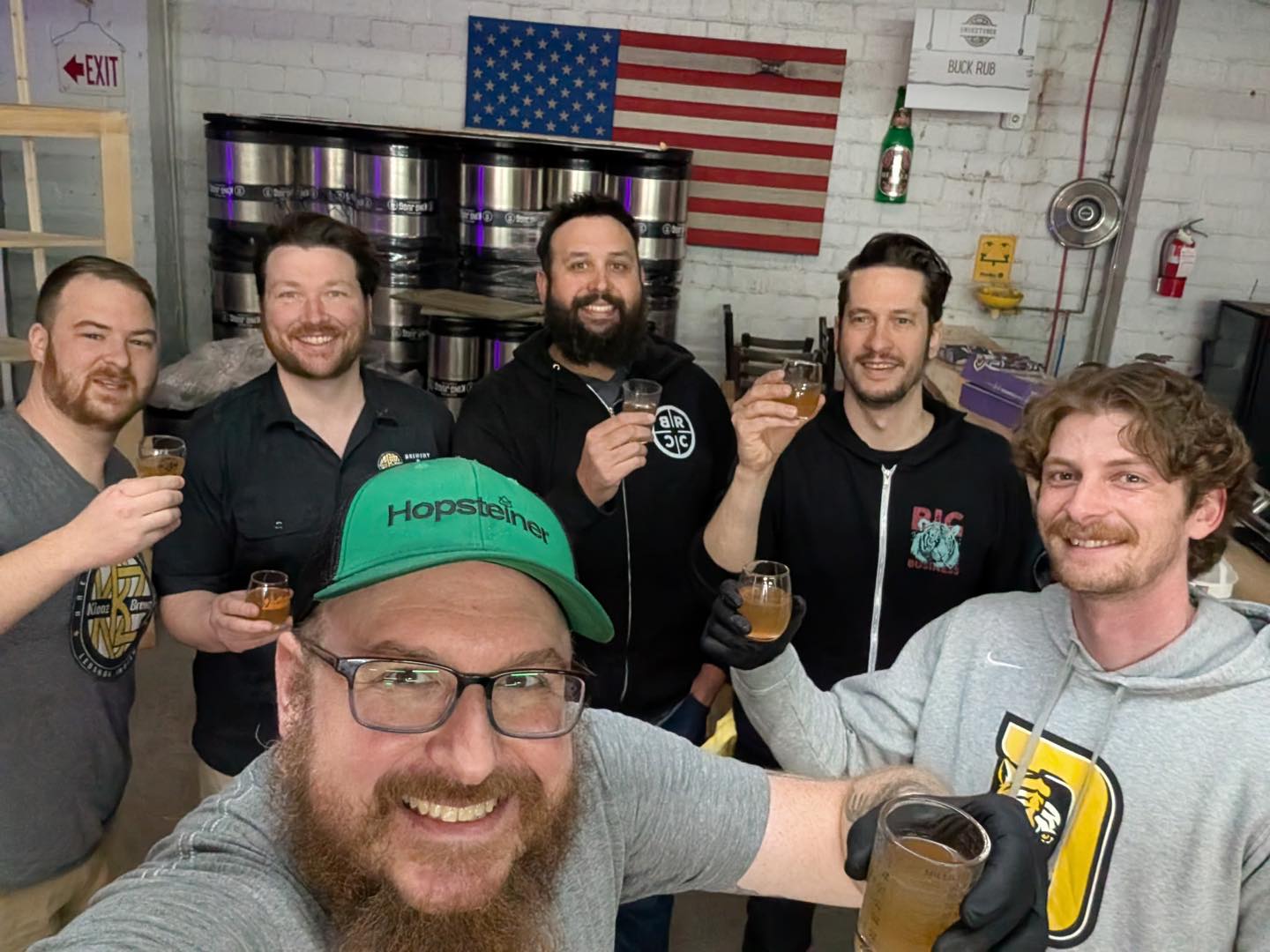
feature image credit: Klooz Brewz and King Jugg Brewing during 2025 collaboration brew day for Rock, Flag, & Eagle American Lager
