 by Mark
 by mark E. Lasbury for Indiana On Tap and Steve Stahley of Creek Bottom Brewery
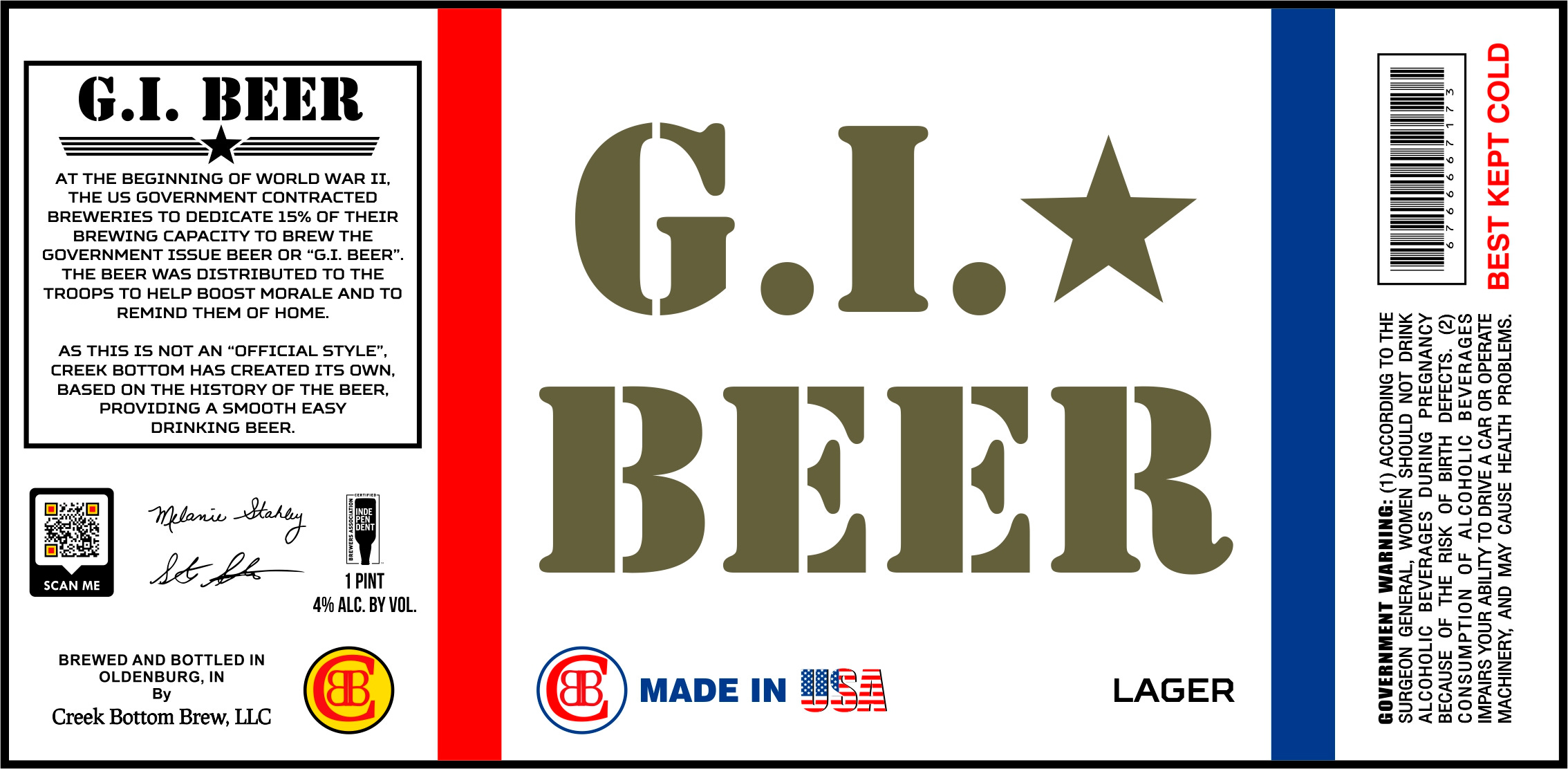
Steve Stahley, owner of Creek Bottom Brewery in Oldenburg caught a podcast in early 2025 discussing the history of US government involvement in getting beer to soldiers in the armed forces. His interest was in the beer itself rather than the distribution aspect, but the podcast didn’t talk about a style or recipe for G.I. (Government Issue Beer). Over the next few weeks, Steve and his son Matt, the brewer at Creek Bottom, researched the history of the beer from WWII with the intent of brewing and putting it on tap on Father’s Day weekend in 2025, exactly 84 years after the first G.I. Beer was served to American soldiers.
G.I. Beer started in 1941, probably even before Pearl Harbor, since the US was ramping up military personnel in case we entered the war. The army was wanting to do better for the troops than in WWI in terms of getting them some of the comforts of home while they were stationed in combat zones or even at the front.
The project was difficult to carry out because they had to negotiate between what was good for the troops, navigate wartime constraints, account for temperance concerns, and figure out the logistics of delivering beer in good condition to the front. Beer was shipped to both European and Pacific theaters. In the beginning of the effort, the U.S. government directed the brewing industry to allocate a portion of production for the military, commonly cited as 15% of total U.S. beer production being set aside for troops, with some references to a quarter of production going to the military overall.
On a per person basis, this was more than the civilian ration that was allowed. The breweries gladly complied and used it as an opportunity to market their product as healthy (the nutritional aspects of beer), and themselves as patriots. They used this project to overcome the damage done to the industry by Prohibition and the current anti-German sentiment in the country, but also to create a new consumer base, American GIs.
Pabst, Anheuser-Busch, Schlitz, Coors were large producers involved, but there were also regional breweries that participated. Early on they used their regular can packaging, only changing the declaration to say, “Withdrawn Free of Tax for Exportation.” Around 1943, they started using uniform olive drab cans for the domestically produced G.I. Beer, with the tax declaration as just about the only lettering on the cans. The military used both bottles and cans to send beer overseas.
In an effort to boost production and supplement American made product, they started producing beer in African and European breweries. The vast majority of the product was still made in the US and shipped, but producing some of the beer in cooperation or under coercion with foreign breweries reduced shipping time/costs/space. As territory was liberated, the government brought some of those local breweries online for production of G.I. Beer.
As for the beer itself, it was definitely an adjunct (because barley at a premium), light lager – as was popular during the period. Soldiers needed beer, but they didn’t need a big buzz, so G.I. Beer was brewed to be about 3.2-4.0%. Specifications and description as described in a couple of different publications about G.I. Beer, and were slightly different for the beers made in Africa and Italy versus the beer made in Germany.
In Africa and Italy, the beer was mostly all-malt (U.S.-shipped “pilsener” malt, likely six-row; some local or mixed with unmalted grains like oats from horse feed stocks). The hops were from U.S. or local stores (including prized Saaz). For Western European made beer brewed in Germany and other spots, some brewers followed U.S. specs under supervision by American personnel (e.g., from Pabst, Schlitz) – including using 25% corn grit adjunct, as done in US breweries, so some of the German beer didn’t adhere to the Reinheitsgebot decree. Creek Bottom approximated the government ABV (4.0%), but since no mention was made of hop bitterness since IBU measurements were not developed for another decade, considering their customer and the usual hop bitterness of a light lager. They chose Cluster as their primary hop for the G.I. Beer.
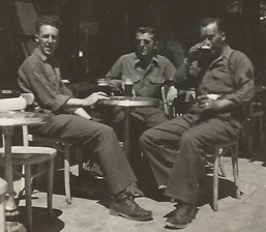
Why was this project important to the Stahleys at Creek Bottom? Both Steve’s father and father-in-law, Vincent Stanley and Lawrence Nobbe, served in WWII. They likely had their fair share of G.I. Beer; it was served all over the European Theater, Pacific Theater, and at US bases here in the states. The project was a success in pretty much all aspects, as troops expressed that the beer was “greatly appreciated.” After WWII ended, foreign and domestic production for the military was reduced as rationing was scaled down (took several years to move to zero, cans became available to the public in 1947), but was not stopped fully until after the occupation ended in 1952 (Japan), and 1955 (Germany). And now you can be a part of that tradition’s revival when you visit Creek Bottom Brewery.
